Cantonese-Style Steamed Fish Recipe
Introduction
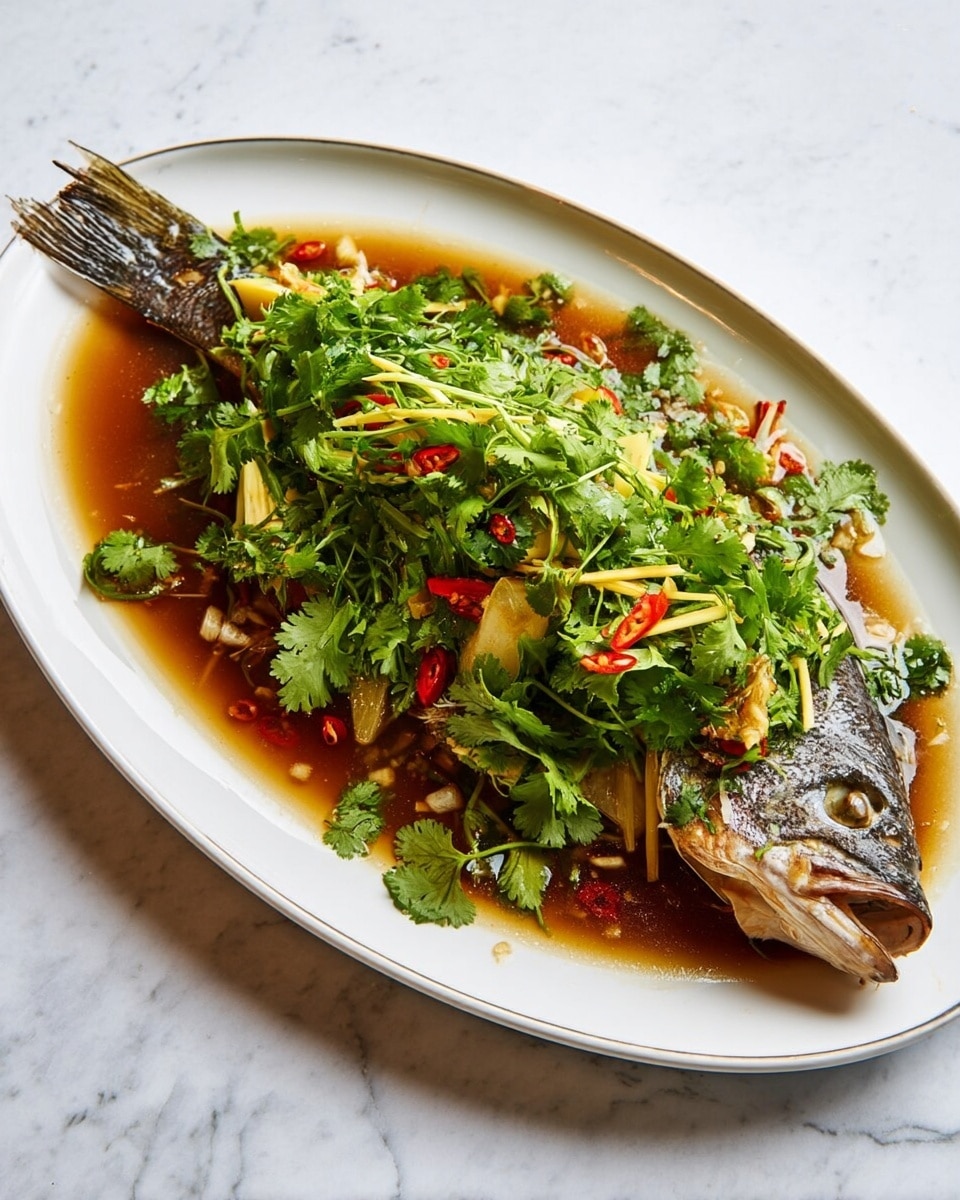
Cantonese-Style Steamed Fish is a delicate and flavorful dish showcasing fresh white fish gently steamed with aromatic ginger, scallions, and cilantro. This classic preparation highlights natural flavors with a simple soy-based sauce and a drizzle of hot oil to awaken the herbs and spices. Perfect for a healthy and elegant meal.
Ingredients
- 1 small bunch cilantro, leaves and tender stems separated from larger stems
- 1 (1½-inch) knob fresh young ginger (about 1 ounce), scrubbed
- 6 whole scallions, ends trimmed
- 2 tablespoons Chinese light soy sauce
- 1 tablespoon Shaoxing wine or dry sherry
- 1 tablespoon granulated sugar
- 1 whole white-fleshed fish, cleaned and gutted, about 1½ to 2½ pounds (or 1 to 1½ pounds lean white fish fillets)
- Salt
- 1 small hot, fresh red pepper, such as Fresno or Thai bird’s-eye, thinly sliced (optional)
- 3 tablespoons neutral oil, such as vegetable or canola
Instructions
- Step 1: Fill a salad spinner with very cold water and add cilantro leaves and tender stems to rinse. Rinse larger cilantro stems separately and scatter them on a plate large enough to fit your fish.
- Step 2: Trim the skin and knobs off the ginger and scatter the trimmings over the cilantro stems on the plate. Peel the ginger, cut it lengthwise into the thinnest planks possible, then slice these into thin slivers. Transfer the slivers to the salad spinner.
- Step 3: Split the scallions at the transition between light and dark green. Add the dark green ends to the plate with cilantro stems.
- Step 4: Cut scallion whites and light greens crosswise into 2-inch segments, then split each in half lengthwise. Place cut side down and slice into the thinnest slivers possible. Add these to the salad spinner.
- Step 5: In a small bowl, combine soy sauce, Shaoxing wine or sherry, sugar, and 1 tablespoon water. Stir until sugar is mostly dissolved, then set aside.
- Step 6: Set a steaming rack or several empty tuna cans (with tops and bottoms removed) inside a wide, deep lidded pan or wok. Add water to just below the rack top and bring to a boil over high heat.
- Step 7: If using whole fish, rinse under cold water and pat dry with paper towels. For fish 2 pounds or larger, slash deeply through the flesh perpendicular to the spine for even cooking. Lightly salt the fish and stuff a few aromatics from the plate into the cavity if using whole fish. Place the fish on the aromatics, overlapping fillets if needed.
- Step 8: Transfer the plate to the steamer, cover, and steam until the thickest part of the fish flakes easily, about 7-10 minutes for flat fish or thin fillets, and 9-12 minutes for round fish.
- Step 9: Using a thin spatula, carefully transfer the fish to a serving platter. Alternatively, serve the fish on the steaming plate, draining excess liquid by holding down the fish gently with the spatula while tilting the plate over the sink. Pour the soy sauce mixture evenly over the hot fish.
- Step 10: Drain and spin the aromatics in the salad spinner, then toss them into a tangled nest. Spread half over the fish and sprinkle with sliced chile if using. Heat oil in a small skillet until shimmering and just starting to smoke, then carefully drizzle the hot oil over the aromatics to release their fragrance. Top the fish with the remaining fresh aromatics and serve immediately.
Tips & Variations
- Use the freshest young ginger you can find for the best delicate aroma and flavor.
- If you prefer milder heat, omit the chili or substitute with mild sweet pepper slices.
- Fillets cook faster but whole fish provides a more dramatic presentation and moist texture.
- For a gluten-free option, substitute tamari for soy sauce.
Storage
Store leftover steamed fish in an airtight container in the refrigerator for up to 2 days. Reheat gently by steaming again or warming briefly in a microwave on low power to prevent drying. Avoid reheating with the hot oil garnish; add fresh aromatics and hot oil only before serving.
How to Serve
Serve this delicious recipe with your favorite sides.
FAQs
Can I use frozen fish for this recipe?
While fresh fish is ideal for steaming, you can use thawed frozen fish if fresh is unavailable. Make sure to pat the fish dry before steaming to maintain texture and flavor.
What kind of fish works best for Cantonese steamed fish?
White-fleshed, mild-flavored fish like sea bass, snapper, or flounder work best. These have firm flesh that holds up well to steaming and absorb the aromatics beautifully.
PrintCantonese-Style Steamed Fish Recipe
This Cantonese-Style Steamed Fish recipe features a whole white-fleshed fish or fillets gently steamed with aromatic ginger, scallions, and cilantro, then drizzled with a savory soy and Shaoxing wine sauce. The final touch of sizzling hot oil poured over fresh herbs and optional chili creates a fragrant, tender dish that highlights the delicate flavors of the fish in a classic, healthy Chinese preparation.
- Prep Time: 15 minutes
- Cook Time: 12 minutes
- Total Time: 27 minutes
- Yield: 4 servings 1x
- Category: Main Dish
- Method: Steaming
- Cuisine: Chinese – Cantonese
Ingredients
Fish and Aromatics
- 1 whole white-fleshed fish, cleaned and gutted, about 1½ to 2½ pounds (or 1 to 1½ pounds lean white fish fillets)
- Salt, to taste
- 1 small bunch cilantro, leaves and tender stems separated from larger stems
- 1 (1½-inch) knob fresh young ginger (about 1 ounce), scrubbed
- 6 whole scallions, ends trimmed
- 1 small hot, fresh red pepper, such as Fresno or Thai bird’s-eye, thinly sliced (optional)
Sauce
- 2 tablespoons Chinese light soy sauce
- 1 tablespoon Shaoxing wine or dry sherry
- 1 tablespoon granulated sugar
- 1 tablespoon water
Finishing Oil
- 3 tablespoons neutral oil, such as vegetable or canola
Instructions
- Prepare aromatics: Rinse cilantro leaves and tender stems in very cold water using a salad spinner, setting aside larger stems on a plate. Trim and peel ginger, scatter the trimmings on the plate, then slice the peeled ginger into the thinnest possible slivers and add to the salad spinner with cilantro leaves.
- Prepare scallions: Split scallions between light and dark green parts. Add dark green ends to the plate with cilantro stems and ginger trimmings. Slice the light green and white scallion parts lengthwise into thin slivers and add them to the salad spinner.
- Make sauce: In a small bowl, combine soy sauce, Shaoxing wine (or dry sherry), sugar, and 1 tablespoon water. Stir until the sugar mostly dissolves, then set aside.
- Set up steamer: Place a steaming rack or several empty tuna cans with tops and bottoms removed inside a wide, deep pan or wok with a lid. Add water just below the rack and bring to a boil over high heat.
- Prepare fish: Rinse whole fish under cold water and pat dry. For fish 2 pounds or larger, make a couple of deep slashes perpendicular to the spine for even cooking. Lightly salt the fish and stuff some of the plate aromatics into the cavity if using whole fish. Arrange fish on top of larger aromatics on the plate.
- Steam fish: Place the plate with fish and aromatics on the steaming rack, cover, and steam until the flesh near the thickest part flakes easily, about 7–10 minutes for flat fish or thin fillets, and 9–12 minutes for round fish.
- Transfer and dress fish: Using a thin spatula, carefully transfer the fish to a serving platter or serve directly on the steaming plate (draining excess liquid by tilting the plate carefully over the sink). Pour the prepared soy sauce mixture over the hot fish.
- Prepare finishing aromatics: Spin the remaining aromatics in the salad spinner to drain extra liquid and toss into a tangled nest. Spread half the aromatics over the fish, sprinkle with sliced chili if using.
- Heat oil and finish dish: Heat neutral oil in a small skillet until shimmering and just starting to smoke. Carefully spoon or pour the hot oil over the aromatics on the fish to create a sizzling effect. Top with the remaining fresh aromatics and serve immediately.
Notes
- Use young ginger for the mildest, freshest flavor; older ginger can be tougher and more fibrous.
- If using fillets, adjust steaming time as fillets cook faster than whole fish.
- Draining liquid from the steaming plate before serving helps prevent the fish from becoming soggy and keeps flavors bright.
- Leaving out the chili makes this dish milder for sensitive palates.
- Serve immediately after pouring hot oil to preserve the sizzling effect and fresh aroma.
Keywords: Cantonese steamed fish, Cantonese fish recipe, steamed whole fish, Chinese steamed fish, healthy fish recipe, ginger scallion fish